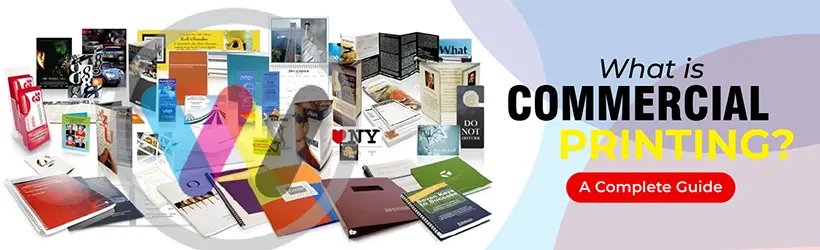
Commercial printing is all around us. The menu you read at a restaurant, the box holding a product, the brochure handed out at an event, and the banner outside a shop are all examples of printed business material.
So, what is commercial print? It means printing carried out for companies, shops, offices, schools, restaurants, event planners, manufacturers, and other organisations. It is different from printing a few pages on a home printer. Commercial printers use professional machines, suitable paper, specialised inks, and finishing tools to produce larger quantities with better colour and cleaner results.
This guide covers how commercial printing works, the products businesses can order, the printing methods available, and the points to check before choosing a printer.
What Is Commercial Printing?
Commercial printing refers to printed material made for business use. A company may need printed items to sell a product, explain a service, display prices, promote an event, or improve its brand image.
The order may be small, such as 100 business cards, or much larger, such as thousands of catalogues or food packaging boxes. Commercial printers can also work with different paper sizes, card thicknesses, colors, shapes, and finishes.
Businesses often use commercial printing for:
- Marketing campaigns
- Product packaging
- Shop displays
- Office stationery
- Events and exhibitions
- Restaurant menus
- Property brochures
- Labels and stickers
A printed item often becomes the first physical contact a customer has with a business. Poor colour, thin paper, or unclear text can create the wrong impression. Good printing makes the material easier to read and more pleasant to handle.
Popular Commercial Printing Products
There is no single type of commercial print product. The choice depends on where and how a business plans to use it.
Common commercial printing products include:
- Business cards
- Flyers
- Folded brochures
- Product catalogues
- Posters
- Indoor and outdoor banners
- Menus
- Price lists
- Letterheads
- Envelopes
A restaurant may order menus, table cards, takeaway boxes, and promotional flyers. A property company may need project brochures, folders, large display boards, and branded stationery.
Printers such as Al Wasl can help businesses decide which size, paper type, finish, and printing method will suit the job without adding features that are not needed.
How the Commercial Printing Process Works
The commercial printing process usually follows a clear series of steps. Care at each stage helps reduce errors and keeps the final order close to the approved design.
1. Understanding the Requirement
The printer starts by asking what the client needs. This usually includes the product type, size, quantity, paper choice, colours, finishing, budget, and delivery date.
A business should also explain where the printed item will be used. A flyer used indoors will need different material from a banner placed outside.
2. Preparing the Design File
The artwork must be ready for printing. A design that looks fine on a phone or laptop may not always print well.
Print files should usually include:
- Clear, high-resolution images
- Correct page size
- Extra bleed around the edges
- CMYK colour mode
- Safe margins
- Fonts that are outlined or embedded
The printer may return the file for correction if images are blurry, text sits too close to the edge, or the size is incorrect.
3. Checking the Proof
Before printing begins, the client receives a proof. This may be a PDF or a physical sample.
The proof should be checked carefully. Names, phone numbers, website addresses, prices, dates, and spelling deserve close attention. Once the client approves the design, changes may become difficult or costly.
4. Printing the Order
The printer selects the machine based on the quantity, material, and required quality. Small jobs may go through a digital printer, while large orders may use offset printing.
5. Adding the Finish
After printing, the material may need cutting, folding, binding, or coating.
Popular finishing choices include:
- Matt or gloss lamination
- Foil lettering
- Embossing
- Spot UV
- Die-cut shapes
- Staple binding
- Perfect binding
- Rounded corners
Finishing should match the purpose of the product. A takeaway menu may need lamination, while a premium invitation may look better with foil or raised lettering.
6. Final Inspection
The printer checks the completed order for colour, cutting, folding, spelling, binding, and damage. The material is then packed and prepared for delivery.
What Is Digital Commercial Printing?
Digital commercial printing sends the design file straight to a printing machine. It does not need metal printing plates, which saves setup time.
Digital printing suits:
- Small print runs
- Urgent orders
- Short-term offers
- Personalised material
- Invitations with different names
- Multiple versions of one design
- Frequently updated price lists
For example, a company can print 150 invitations with a different guest name on each copy. Digital printing also works well when a business only needs a limited number of brochures or menus.
What Is Offset Printing?
Offset printing uses plates to place ink onto a rubber surface, which then transfers the design onto paper. It takes more preparation, but it works well for large orders.
Offset printing is often used for:
- Books
- Magazines
- Large brochure orders
- Packaging
- Catalogues
- Corporate stationery
The main benefit is consistency. Colours and details remain steady across thousands of copies. The price per copy also becomes lower when the quantity increases.
Digital Printing vs Offset Printing
| Point | Digital Printing | Offset Printing |
|---|---|---|
| Best For | Small and Medium Orders | Large Orders |
| Setup | Quick | Takes More Time |
| Personalisation | Easy | More Difficult |
| Small-Order Cost | Usually Practical | Often Costly |
| Large-Order Cost | Can Be Higher | Usually Better |
| Colour Matching | Good | More Controlled |
A small batch of flyers may suit digital printing. A large catalogue order may cost less with offset printing.
How to Choose Commercial Printing Companies
Before selecting from different commercial printing companies, ask a few practical questions.
Check whether the printer:
- Has handled similar work
- Offers the paper and finish you need
- Provides a proof before printing
- Gives a clear delivery date
- Explains all charges
- Can show printed samples
- Checks artwork before production
- Has reliable customer reviews
Do not choose only by price. A cheaper quote may use thinner paper, lower print quality, or limited finishing. Ask what is included before confirming the order.
Why Businesses Still Use Printed Material
Printed material gives customers something they can hold, read, keep, or share. A brochure can stay on a desk for weeks. A product box can attract attention in a shop. A business card can help someone remember a meeting.
Print also works well alongside online marketing. A flyer can include a website, QR code, social media handle, or offer code. This connects offline promotion with digital action.
Understanding What Is Commercial Printing? A Complete Guide makes it easier to plan a print order. Decide what the item needs to do, where it will be used, how many copies are required, and how long it should last. A good printer will then help you choose the right method and material.
Frequently Asked Questions
What is commercial print used for?
Businesses use it for marketing, packaging, branding, office material, events, menus, signs, and customer information.
Which products can commercial printers make?
They can produce brochures, cards, catalogues, labels, packaging, banners, stationery, menus, books, and posters.
Is digital printing good for small orders?
Yes. Digital printing works well for small quantities and jobs that need quick delivery.
Is offset printing better for large orders?
Yes. Offset printing often costs less per copy when the quantity is high.
Which file type should I send to a printer?
A high-resolution, print-ready PDF is usually the safest option.