Understanding printing in today’s business world
Printing has moved far beyond basic paper output. It now plays a key role in branding, advertising, packaging, and real-world communication. Even in a digital-heavy environment, print continues to hold strong value because it creates physical presence and trust.
Businesses still rely on printed materials for visibility and long-term brand recall. This is where understanding Print Marketing Value becomes important for smarter marketing decisions.
Large format printing and visual communication
Large format printing is used for high-impact visuals like banners, billboards, posters, and exhibition graphics. These prints are designed to be seen from a distance while still maintaining clarity and color strength.
It requires specialized machines that handle oversized materials without losing quality. Companies working on large campaigns often depend on professional printing press setups such as Dubai Print Experts for consistent output and commercial-grade finishing.
Ink systems and how they affect output
Ink selection plays a major role in print quality and durability. Different ink types behave differently depending on surface and usage.
Pigment inks offer long-lasting results, dye-based inks provide vibrant color output, solvent inks work well on flexible surfaces, and solid inks deliver bold tones after melting into a wax-like form.
The right ink choice directly impacts how a design looks under different lighting, surfaces, and environmental conditions.
Offset and digital printing methods
Printing production mainly depends on two core methods: offset and digital.
Offset printing is ideal for large-volume jobs where consistency and cost efficiency matter. It is commonly used for magazines, packaging, and corporate stationery.
Digital printing is faster and more flexible, especially for short runs and customized designs. It eliminates heavy setup time and supports on-demand production.
Businesses often compare both methods using Print Process Guide before finalizing production.
For bulk production needs, Offset Print Services are widely used, while fast-turnaround projects depend on Digital Print Services.
Dye sublimation in fabric printing
Dye sublimation is a specialized printing technique used mainly for textiles and promotional products. In this process, ink turns into gas under heat and bonds directly with fabric fibers.
This creates long-lasting prints that resist fading, cracking, and peeling. It is commonly used in sportswear, flags, and custom merchandise where durability is important.
Saddle stitching and finishing techniques
Saddle stitching is a bookbinding method where folded sheets are stapled along the spine. It is widely used for brochures, catalogs, magazines, and booklets.
Despite being simple, it provides a clean and professional finish at a low production cost. Finishing techniques like cutting, folding, and lamination further enhance the final look and feel of printed materials.
Corporate printing and brand communication
Printing plays a strong role in corporate branding and employee engagement. Companies use printed materials for presentations, packaging, gifting, and internal communication.
For example, premium campaigns often include concepts like Executive Gift Ideas, where printed packaging enhances overall presentation and brand value.
Seasonal campaigns also use printed elements heavily. Companies planning year-end engagement often explore Employee Gift Plans to improve brand connection.
Material choice and print consistency
Paper type and coating significantly affect print output. Glossy paper enhances brightness, matte paper gives a subtle premium feel, and coated paper improves sharpness for image-heavy designs.
Consistency across batches is essential, especially in large campaigns. Even minor variations in color or alignment can affect brand perception.
Importance of print knowledge
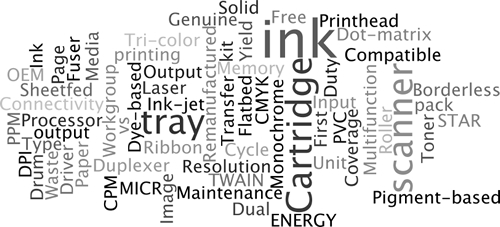
Understanding printing terms helps in making better production decisions. From ink selection to printing method, every choice affects cost, quality, and delivery speed.
Print is not just a production process—it is a communication tool. When used correctly, it strengthens branding and creates a lasting physical impression.