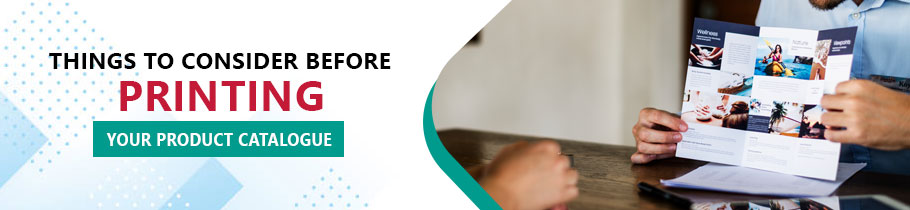
Even in an era dominated by digital e-commerce websites and online PDF downloads, a physical product catalogue remains one of the most powerful sales tools a business can possess. It acts as a tangible showroom that customers can browse at their own pace, free from the distractions of online pop-ups and notifications. A beautifully executed brochure or catalogue invites deeper engagement, builds corporate trust, and leaves a lasting impression that drives significant revenue.
However, producing a professional catalogue requires a lot more than just sending a few product photos to a local print shop. It involves careful strategic planning regarding design, layouts, paper textures, and execution methods. If you rush the process, minor errors can quickly turn into highly expensive mistakes. To help you get the best possible return on your investment, here are the vital things to consider before printing your product catalogue.
The Strategic Planning Behind an Effective Corporate Catalogue
Before you commit your entire marketing budget to production, you must understand exactly how your catalogue will be distributed, who will be reading it, and what printing methods best suit your volume requirements. Balancing these critical production factors ensures that your final physical asset looks absolutely elite while keeping your unit costs highly efficient.
1. Choosing the Right Printing Method Based on Volume
The total number of catalogues you need to produce will heavily dictate your production method and budget. If you are a large wholesale enterprise printing thousands of copies for seasonal distribution, utilizing a traditional Offset Printing press is the most cost-effective path, as it offers the absolute lowest per-unit price along with flawless, ultra-precise color management.
2. On-Demand Flexibility and Rapid Updates
On the other hand, if you manage a boutique luxury brand or work in an industry where product specs and prices change frequently, you do not want to hold massive physical inventories. Choosing premium Digital Printing allows you to print smaller batches on demand, make rapid textual corrections, and enjoy incredibly fast turnaround times without compromising on visual sharpness.
3. Designing for High-Stakes Corporate Events
Think about where your target audience will interact with your printed media. If your primary goal is to hand out these materials to high-value B2B prospects during trade shows, expos, or major product launches, your presentation needs to look completely flawless. Collaborating with an expert Exhibitions supplier guarantees that your physical catalogs perfectly complement your booth themes, banners, and roll-ups for a cohesive corporate image.
4. Establishing store and Site Authority
Your product catalogue should never exist in a visual silo; it must align seamlessly with your business’s real-world identity. A customer who reads your premium booklet should recognize the exact same brand authority when they approach your retail facility. Ensuring that your catalogue design perfectly mirrors the graphics on your storefront Sign Board or outdoor branding assets builds an instant psychological anchor of corporate trust.
5. Scaling Imagery for Grand Outdoor Promotions
If your catalogue launch is tied to a massive promotional push, you might want to translate those high-resolution product layouts into large-scale outdoor media. Utilizing heavy-duty Flex Printing lets you turn catalog hero shots into vibrant, weather-resistant outdoor banners, making your product line completely unmissable to the general public.
6. Safety Perimeters Turned Marketing Assets
For industrial brands or massive real estate developments, your product line is often displayed on-site before it is even built. When setting up a new showroom or facility, you can take your catalogue concept and display it on a grand physical scale. Deploying customized large-format Hoarding graphics allows you to turn raw construction boundaries into a massive, highly visible public showcase of your upcoming inventory.
7. Layout Structure, Typography, and Margins
Always double-check your technical formatting before exporting your final files. Ensure that all text sizes are highly legible and that you have left an adequate gutter margin for the binding process—whether you choose saddle-stitching, perfect binding, or spiral wiring. Crucially, all product imagery must be saved at a minimum resolution of 300 DPI to avoid fuzzy, pixelated images that instantly degrade your brand’s professional image.
Catalogue Production Checklist: Critical Decisions to Make
To ensure a flawless manufacturing flow and prevent expensive reprints, use this comparison matrix to finalize your catalogue parameters before sending files to production:
| Production Element | Low-Volume Strategy (Boutique / Test Run) | High-Volume Strategy (Mass Distribution) |
|---|---|---|
| Printing Technology | Digital platforms for speed, text flexibility, and quick updates. | Industrial offset machinery for ultimate color accuracy and bulk savings. |
| Paper Selection | Heavyweight textured stocks to give smaller runs a luxury feel. | Standard matte or gloss coated text weight sheets to keep bulk postage costs low. |
| Binding Options | Wire-O or perfect binding for a modern, sleek catalog spine look. | Saddle-stitching (stapling) for highly efficient, cost-effective processing. |
| Primary Focus | Niche personalization, localized seasonal specials, and rapid testing. | Global brand reach, comprehensive master inventory listings, and lasting durability. |
Conclusion
A product catalogue is a major investment that acts as the physical face of your company. By taking the time to carefully evaluate your total print volume, design technicalities, and binding preferences, you can ensure that your final document acts as a high-performance sales asset. Partnering with professional printers and maintaining total brand consistency across all elements guarantees that your printed catalogue cuts through the digital clutter and successfully boosts your market authority.