Printing today is no longer a simple choice between two machines. It’s a decision that affects cost, speed, brand quality, and even how customers perceive a product. In this detailed continuation of Digital vs Offset Printing Part III Overview, we break down offset printing in a way that actually helps you decide what to use in real projects, not just theory.
At the same time, modern print workflows are shifting fast. Digital systems are improving, packaging demands are changing, and businesses are mixing technologies more than ever. If you want a broader understanding of how digital methods are evolving, Digital Printing benefits gives a solid starting point.
For businesses working in high-volume commercial production, choosing the right partner matters just as much as choosing the right method. That’s why professional setups like Best Printing Press in Dubai continue to invest in both offset and digital systems to handle different project needs without compromise.
Offset Printing Quality and Why It Still Dominates Large Scale Work
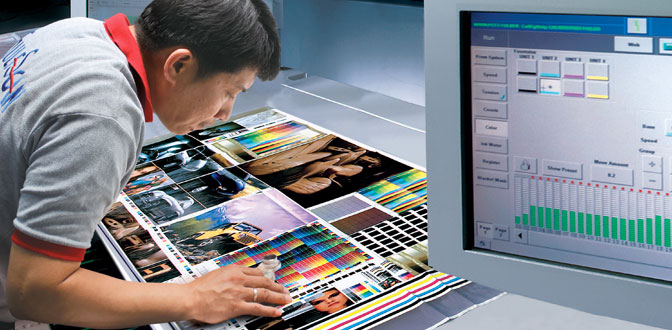
Offset printing is still considered one of the most reliable and high-quality printing methods available today. The reason is not hype—it’s consistency. Once the setup is complete, every sheet coming out of the press looks identical, with clean edges, sharp detailing, and stable color density across thousands of copies.
This level of consistency is why industries like publishing, packaging, retail branding, and corporate marketing still depend heavily on offset production. When a brand needs thousands of brochures or product catalogs, even a slight variation in print quality can create inconsistency. Offset eliminates that problem.
To understand where offset stands compared to newer methods, this comparison in Offset Printing pros highlights why businesses still prefer it for bulk production and long-run campaigns.
How Lithography Actually Works in Real Production
Offset printing is based on lithography, a process that uses the principle of oil and water repelling each other. It sounds simple, but the engineering behind it is what makes it powerful.
The image is first transferred onto aluminium plates. These plates don’t print directly onto paper. Instead, the inked image moves to a rubber blanket cylinder, which then presses it onto the final surface. This indirect transfer is what keeps the plate from wearing out quickly and ensures long production runs remain stable.
Because of this structure, offset printing maintains consistent quality even when the job runs into tens of thousands or millions of copies. It is not designed for speed changes or frequent design edits—it is designed for stability and scale.
Web Offset Printing and Why It’s Built for High Volume Production
Web offset printing takes the same core concept and scales it further. Instead of individual sheets, it uses a continuous roll of paper that runs through the press at high speed. Once printed, the material is cut, folded, and processed into the final format.
This system is widely used in newspapers, magazines, catalogs, and mass distribution materials where speed and volume matter more than customization.
There are two main types of web offset printing:
- Heatset – Ink is dried using hot air, making it suitable for glossy magazines and premium catalogs.
- Coldset – Ink dries naturally through absorption, commonly used for newspapers and basic print runs.
Both systems are designed for continuous output. The goal is not variation, but efficiency at scale.
Where Digital Printing Fits in Today’s Market
Digital printing has changed the way short-run and fast-turnaround printing works. Unlike offset, it does not require plates or long setup times. That means jobs can start almost immediately, which is ideal for urgent campaigns, personalized prints, and small batches.
The real advantage of digital printing is flexibility. Designs can be changed quickly, and each print can even be customized individually. This is something offset cannot do efficiently.
For a deeper look at how digital systems compare in real production environments, Digital vs Offset Printing explains how both technologies perform under different conditions.
At the production level, modern facilities such as Digital Printing are now handling everything from business cards to packaging prototypes, showing how far digital technology has come.
When Digital Printing Makes More Sense
Digital printing is the right choice when speed and flexibility matter more than unit cost. If you need small quantities or frequently changing designs, offset becomes impractical due to setup requirements.
This is where digital printing performs better in real-world business use:
- Short-run marketing materials
- Personalized campaigns
- Fast turnaround jobs
- On-demand printing requirements
Packaging is also evolving in this direction. Many brands now test designs using digital printing before committing to offset production. This hybrid approach reduces risk and improves decision-making in large campaigns.
If you look at packaging trends more closely, Printing Packaging explains how digital workflows are reshaping the packaging industry with speed and customization.
When Offset Printing Still Wins the Game
Offset printing continues to dominate when large-scale production is involved. Once the setup is complete, the cost per unit drops significantly, making it the most economical option for bulk printing.
It also delivers stronger color consistency, especially for brand-heavy materials where exact shade matching matters. That’s why major publishing houses, advertising agencies, and packaging companies still rely heavily on offset systems.
This is also why traditional setups like Offset Printing remain essential for commercial-scale production. They are built for stability, not quick changes.
In fact, when you compare both systems properly, it becomes clear that offset is not competing with digital—it is serving a completely different production need.
Real Industry Perspective and Final Understanding
The printing industry is not shifting from offset to digital. It is shifting toward a combination of both. Each method solves a different problem. Digital solves speed and flexibility. Offset solves scale and consistency.
Businesses that understand this balance make better production decisions. They don’t overpay for offset when they need 200 copies, and they don’t use digital for 50,000 catalogs when offset is clearly more efficient.
At the center of this ecosystem are full-service providers like Printing Press, where both technologies work together instead of competing.
Once you understand how both systems behave in real conditions, the decision becomes simple. It’s not about choosing the “best” printing method. It’s about choosing the right one for the job.